TENNIS, SCORED FIFTEEN, THIRTY, FORTY.
SportsBuddy scores tennis on the ITF shape: advantage scoring, six games a set with a tiebreak to seven at six all, best of three or best of five, and an optional super tiebreak in place of a deciding set. Points are filed as aces, forehand and backhand winners, volleys, smashes or double faults, and the public scoreboard replays the ladder point by point.
Tennis is one of the few sports where the scoring itself is the hard part. Points that count fifteen, thirty, forty; games that need two clear; sets that need two games clear until they suddenly do not and turn into a tiebreak; and a deciding set that might be a full set, a tiebreak set or a super tiebreak depending on whose competition you are in.
SportsBuddy holds all of that in one engine, and gives the scorer nothing to compute. Tap the side that won the point and how they won it. Deuce, advantage, the change of ends on the odd games, the tiebreak at six all with its own serve rotation, the super tiebreak in a deciding set — all of it runs underneath.
Advantage scoring is the default because it is what tennis plays. The no-ad alternatives are still there as tournament settings, for the club leagues and one-day draws that have adopted them to keep courts moving.
The scoring screen
The scorer taps a side and a shot. The 15-30-40 ladder is not their problem.
The shot that won the point
ACE, SERVE WINNER, FOREHAND WINNER, BACKHAND WINNER, VOLLEY WINNER, SMASH, plain WINNER, DOUBLE FAULT, OPPONENT ERROR and UNFORCED ERROR — enough to tell a serving day from a groundstroke day when you read the match back.
Errors attributed correctly
The point always goes to the side the scorer taps. On a double fault or an unforced error the player picker shows the other team, so the mistake is recorded against whoever made it without handing them the point.
Deuce, advantage, tiebreak
The ladder runs itself: fifteen, thirty, forty, deuce, advantage, game. At six games all the set goes to a tiebreak to seven with the one-two-two serve rotation handled, and the screen says which state the game is in throughout.
Two serves and the change of ends
First serve, fault, second serve, double fault to the receiver, as a sequence. Ends change on the odd games and every six points of a tiebreak, prompted rather than assumed.
End a set that cannot be played out
Rain, light, a court-time limit or a retirement. END SET closes the set in play and asks explicitly who takes it, so a truncated set is awarded rather than inferred from the scoreboard.
Hand the match to another device
Open the match under IN PROGRESS on a second phone and the sets, games, the point in play and the serve rebuild themselves. Carry on from where the last person stopped.
Format set per tournament
Club tennis has spent twenty years inventing shorter formats. All of them are configurations here rather than compromises.
Advantage, or no-ad
Advantage scoring — win by two, unlimited deuces — is the tennis default. Switch the deuce mode and 40-40 becomes a single deciding point, or a decider at the third deuce, for leagues that have moved to keep matches inside a court hour.
Best of three or best of five
Sets to win the match, games needed to take a set and the two-game lead to close it are all settings — so a short-set format to four games is configured, not improvised.
Where the tiebreak comes
A tiebreak to seven at six games all by default. Move the trigger, change the target, or switch tiebreaks off for a format that plays every set to a two-game margin.
A super tiebreak instead of a third set
Turn it on and the deciding set becomes a single tiebreak to ten. It is what makes a full club draw fit into an afternoon, and the deciding set is then reported by its tiebreak score.
Singles and doubles
Tennis defaults to singles. Nominate one player a side or two before the match, or let the scorer set the lineup courtside — the point pickers follow whichever you chose.
What everyone watching sees
The link that answers who won the second set without anyone walking back to the clubhouse.
The live point
Sets and games at the top, the current point beneath, and the state of the game named — DEUCE with its number, TIE-BREAK or SUPER TIE-BREAK.
The ladder, replayed
Every point with the score it produced — 15-0, 30-15, 40-30 — reconstructed through the same engine the scorer used, so the public page and the court agree.
A tab for every set
Each set with its game score and the tiebreak score beneath it where one was played. Tap a set to read its points.
Match stats
Points, games and sets won side by side, then a line per shot type — aces, forehand winners, backhand winners, double faults, unforced errors — for both sides.
The format, stated
A card on every match page spells out the format in force: best of how many sets, games per set, where the tiebreak comes and what it runs to, the deuce mode, and whether the decider is a super tiebreak.
For whoever is running the tournament
Draws, court time and the table.
Standings on set difference
Points on your own per-win configuration with ties broken on sets won minus sets lost, rebuilt automatically as results land.
Groups then knockouts
One table per group with the qualifiers marked, and the group results kept out of the bracket they feed.
A scorer per court
Assign each fixture to whoever is scoring it; clear the assignment to hand the court on to the next pair of matches.
Entries and squads
Clubs and teams register themselves and you approve or reject, and squads are built by the owners rather than typed in by you.
One page for the event
Fixtures, live scores, results and tables on one shareable link, for everyone who is not standing at the fence.
Written out, step by step
Every step below is transcribed from the real button labels in the app, so you can follow it word for word on the phone in your hand.
- Score padel and tennisPoint, game and set scoring with serve faults, undo, golden point and tie-breaks handled for you.
- Set your lineup (racket and net sports)Pick the players who take the court for badminton, table tennis, pickleball, tennis and padel.
- Assign a scorer to a matchHand a fixture to the person who will score it live.
- Hand a live match to another deviceSwap phones mid-match without losing a single ball or point.
- Create a tournamentThe three-step wizard that sets up your event — identity, then logistics and match settings, then prizes and rules.
- Schedule matches once teams are readyTurn a list of registered teams into a fixture list, one row per match.
- Watch on the website — no account neededShare a link with anyone and they can follow the match in a browser.
TENNIS ANSWERED.
Asked most often about tennis on SportsBuddy. The screen-by-screen version of every flow lives in the step-by-step guides.
Does SportsBuddy score tennis with proper 15-30-40 scoring?
Does the app handle tiebreaks and super tiebreaks?
Can a tennis tournament use no-ad scoring?
What match statistics does the tennis viewer show?
Can spectators watch a tennis match live without an account?
What happens if a tennis match is stopped by rain or a retirement?
YOUR SPORT.
YOUR ROLE.
Download SportsBuddy, pick your role, and get started in under 2 minutes. No subscription needed to play.
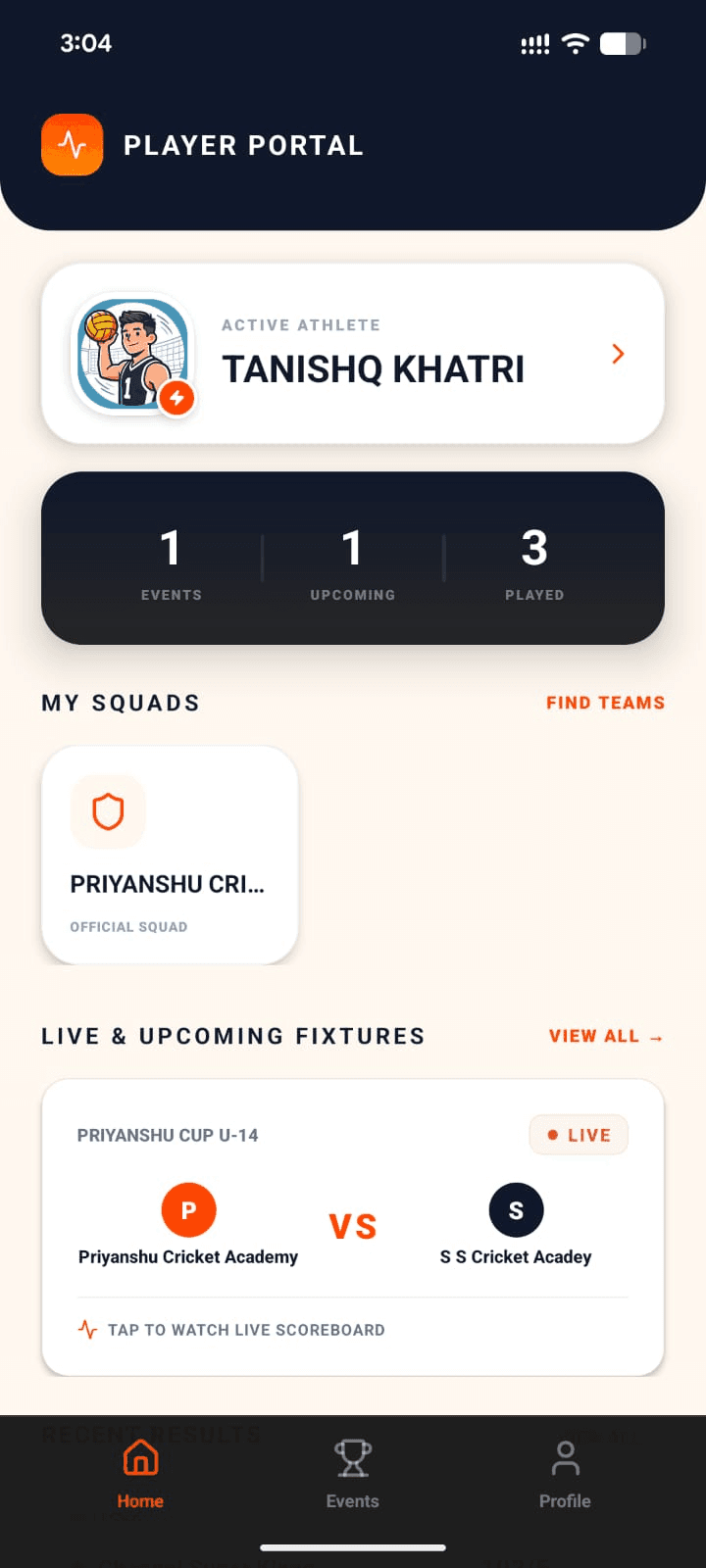
Player
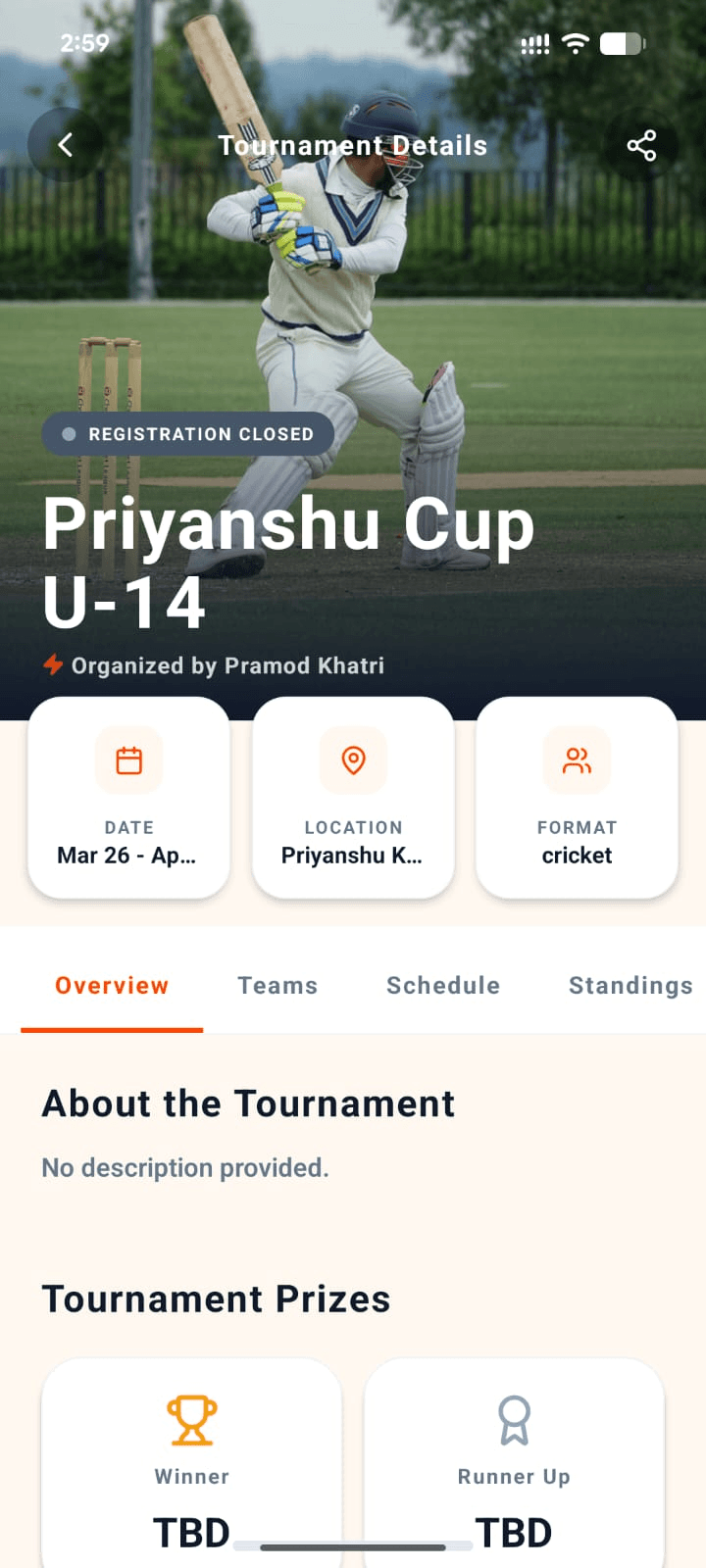
Organizer
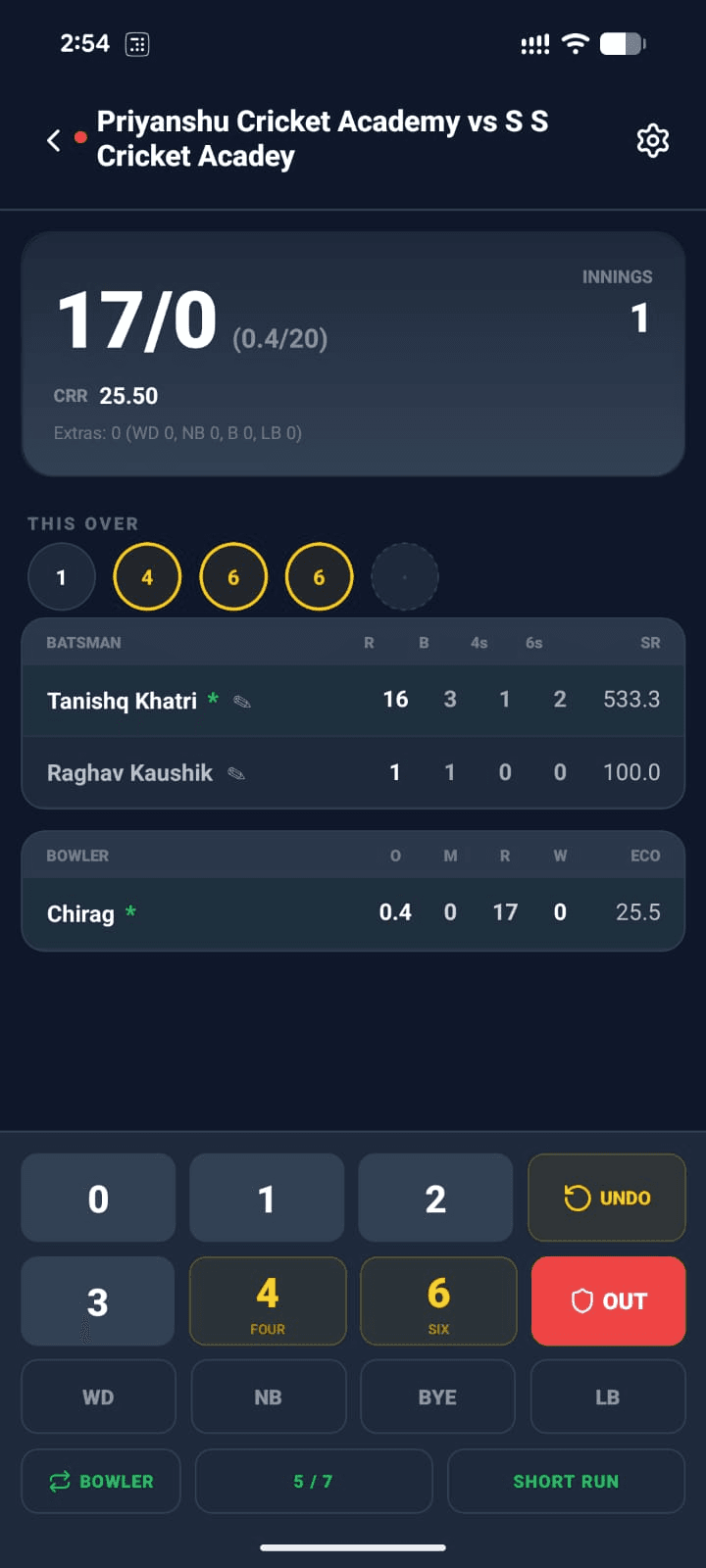
Scorer
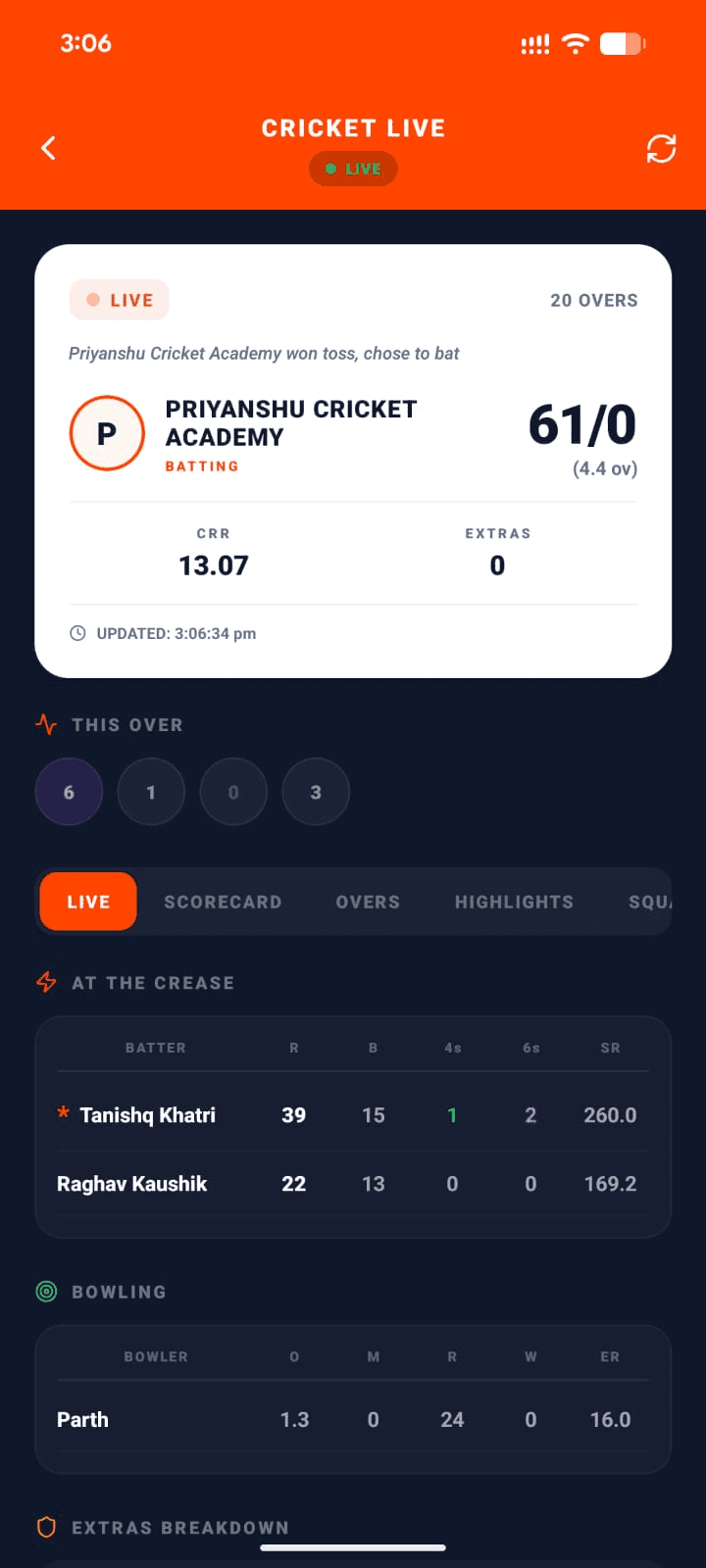
Viewer
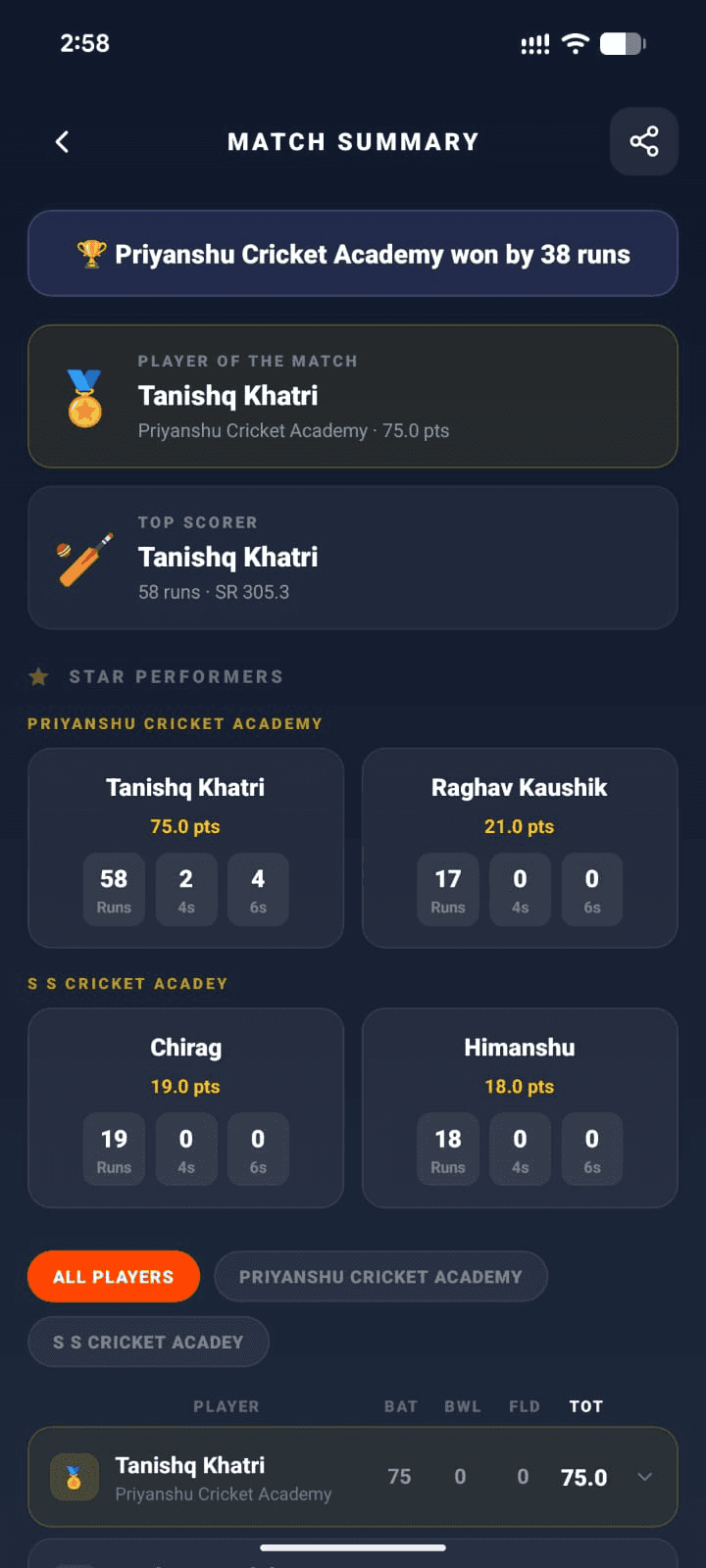
Summary
Organizer
Create & run tournaments end-to-end
Team Owner
Manage squad & join tournaments
Player
Build your profile & track stats
Scorer
Score matches live from the field
Viewer
Follow live scores in real-time
Search for "The Sports Buddy" on Google Play or the App Store — that's us.
Just want to watch? Follow live scores on the website →